Ek baar ek publisher ne mujhse pucha tha — "Mera content achha hai, backlinks bhi theek-thaak hain, phir bhi rankings stuck hain, kya karu?" Jab humne unki site check ki, page load hone me lagbhag 4 second lag rahe the, aur scroll karte waqt content idhar-udhar shift ho raha tha. Content quality ka koi masla nahi tha — masla tha ki Google ke paas unki site ka experience data hi "poor" tha.
Yeh situation kaafi common hai. 2026 me sirf 47% websites hi Google ke "good" Core Web Vitals thresholds achieve kar paati hain — baaki 53% apni conversions, traffic aur revenue ka ek significant hissa silently kho dete hain, bina yeh realize kiye ki wajah content nahi, performance hai. Chaliye samajhte hain teeno metrics ko, aur inhe practically fix kaise karein.
Core Web Vitals Actually Measure Karte Kya Hain
Teen metrics hain jo Google track karta hai, aur March 2024 se inme ek badlaav bhi aa chuka hai — FID (First Input Delay) ko replace kar diya gaya hai INP se, jo ab zyada comprehensive tarike se responsiveness measure karta hai.
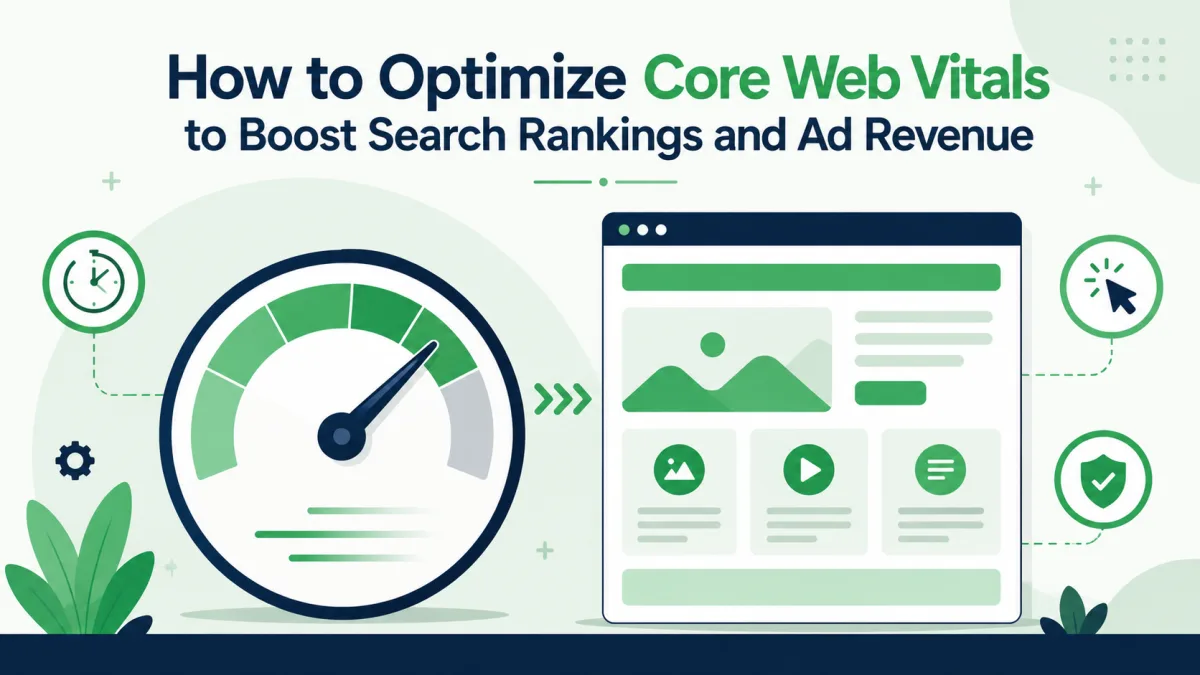
LCP (Largest Contentful Paint) — yeh batata hai ki page ka sabse bada visible element (usually hero image ya heading) kitni jaldi load hota hai. Target: 2.5 second se kam.
INP (Interaction to Next Paint) — yeh measure karta hai ki jab user click, tap, ya type karta hai, browser kitni jaldi respond karta hai — aur yeh sirf pehli interaction nahi, poori session ki worst interaction dekhta hai. Target: 200 milliseconds se kam.
CLS (Cumulative Layout Shift) — yeh check karta hai ki page load hote waqt content kitna "jump" karta hai — jaise koi image late load ho aur text neeche shift ho jaaye. Target: 0.1 se kam.
Important baat — yeh sab field data pe based hote hain, matlab real users ke actual experience se, na ki sirf ek lab test se. Google Search Console me yeh 28-din ke rolling average ke through dikhaya jaata hai.
Yeh Sirf "Technical" Cheez Nahi, Direct Revenue Impact Hai
Yahan wo part hai jo bahut publishers underestimate karte hain. Yeh sirf ranking factor nahi hai — Google ise ek tie-breaker ki tarah use karta hai jab do pages similar relevance ki hoti hain. Agar aapka content aapke competitor jaisa hi achha hai, lekin unka LCP 1.8 second hai aur aapka 4.1 second, toh Google generally unhe favor karega.
Lekin asli story ranking se bhi aage jaati hai. Real case studies dekhein toh pattern clear hai — ek brand ne apni CLS 15% improve karke ad revenue me 10% ka increase dekha, ek doosre ne LCP 55% reduce karke session duration me 23% ka jump dekha. Ek chhoti tech blog ne apna LCP 3.9 second se 1.9 second, aur CLS 0.3 se 0.08 tak improve kiya — teen mahine ke andar organic traffic 22% badh gaya.
Yeh sab isliye hota hai kyunki slow, unstable pages directly bounce rate badhate hain. 2-second se kam load hone wali pages ka bounce rate lagbhag 9% hota hai, jabki 5-second se zyada wali pages ka 38% tak pahunch jaata hai. Aur agar aap ad-supported site chalate hain, toh yeh seedha samajh me aata hai — jitna zyada log bounce karenge, utne kam ad impressions generate honge, chahe aapka content kitna bhi achha kyun na ho.
LCP Fix Karne Ke Practical Tarike
Sabse pehla step hai apna hero image ya main content element identify karna, jo usually page ka LCP element hota hai. Uske baad:
- Image preloading karein — apne critical images ko
<link rel="preload">ke through browser ko early signal dein. - Critical CSS inline karein — jo styles above-the-fold content ke liye zaroori hain, unhe directly HTML me inline kar dein, taaki extra request ka wait na karna pade.
- Fonts preload karein aur
font-display: swapuse karein, taaki text turant visible ho, chahe custom font load ho raha ho. - Agar possible ho toh server-side rendering consider karein, especially agar aapki site JavaScript-heavy hai.
Yeh chaaron combined fixes hi sabse zyada impact create karte hain slow LCP scores ke liye.
INP Fix Karna — 2026 Ka Sabse Zyada Fail Hone Wala Metric
Interesting baat yeh hai ki 2026 me sabse zyada sites INP pe hi fail hoti hain — lagbhag 43% sites still 200ms ka threshold cross nahi kar paati. Wajah simple hai — INP poori session ki interactions track karta hai, sirf pehli click nahi, isliye ise "game" karna FID ke muqable kaafi mushkil hai.
Practical fixes:
- Heavy JavaScript tasks ko chhote chunks me todein taaki main thread block na ho.
- Third-party scripts (jaise unnecessary tracking pixels ya chat widgets) ko carefully audit karein — yeh often sabse bada culprit hote hain.
- Event handlers ko optimize karein — agar kisi button click pe bahut zyada processing ho rahi hai, usse defer ya async karein.
- Ads specifically ke liye — ad scripts ko asynchronously load karein, taaki wo main page ki responsiveness block na karein.
CLS Fix Karna — Explicit Dimensions Hi Key Hai
CLS teeno metrics me se aksar sabse aasan hota hai fix karna, kyunki iska solution mostly ek hi principle pe based hai — har element ko uski jagah pehle se reserve karo.
- Har image, video, aur iframe ko explicit
widthaurheightattributes dein. - Ad slots ke liye bhi space reserve karein — yeh especially publishers ke liye critical hai, kyunki late-loading ads sabse common CLS culprit hote hain. Jab tak ad load nahi hota, agar uski jagah reserve nahi hai, toh poora content neeche-upar shift hota hai.
- Dynamic content (jaise "load more" buttons ya notifications) ke liye bhi pehle se space allocate karein.
- Web fonts ke liye
font-display: swapyahan bhi help karta hai, kyunki font-swap se hone wala shift bhi CLS me count hota hai.
Ek Important Baat — Patience Rakhni Padegi
Yeh cheez jo log aksar miss kar dete hain — Core Web Vitals ka improvement turant reflect nahi hota rankings me. Kyunki Google jo field data use karta hai, wo ek 28-din ka rolling average hota hai, isliye aapka fix apply hone ke baad bhi, us data ko poori tarah measurement me aane me time lagta hai.
Kaafi log impatient ho jaate hain aur do hafte me results na dikhne pe apne changes revert kar dete hain — yeh galti hai. Agar aapne sahi technical changes kiye hain, toh unhe kaam karne ka time dein, revert karne ki jaldi mat karein.
Sirf Score Chase Mat Kariye — Content Bhi Utna Hi Zaroori Hai
Ek common misconception hai ki agar aap Lighthouse me 100 score paa lein, toh sab kuch theek ho jaayega. Aisa nahi hai. Lighthouse ek lab-based, simulated test hai, jabki actual ranking real users ke field data pe depend karti hai — jo alag ho sakta hai, especially agar aapke real visitors slower devices ya connections use kar rahe hain.
Aur agar aapka underlying content thin ya low-value hai, toh sirf CLS fix karne se rankings improve nahi hongi. Core Web Vitals ko apni overall SEO strategy ka ek supporting part samajhein, na ki isolated goal — jaisा humne Article 5 me organic traffic strategy discuss ki thi, wahan bhi yehi principle apply hota hai: technical fixes aur genuinely useful content, dono saath chalte hain.
Quick Reference Table
| Metric | Measures | Good Threshold | Top Fix |
|---|---|---|---|
| LCP | Loading speed | Under 2.5s | Image preload + critical CSS |
| INP | Responsiveness | Under 200ms | Reduce/split JavaScript tasks |
| CLS | Visual stability | Under 0.1 | Explicit dimensions everywhere |
Ad Revenue Ke Liye Ek Special Note
Agar aap ad-supported site chalate hain, toh Core Web Vitals sirf SEO exercise nahi, seedha aapki earning se juda hua hai. Ads ke liye reserved space, asynchronous loading, aur stable layout — yeh sab sirf CLS score improve nahi karte, balki humare Article 2 me discuss kiye gaye viewability aur eCPM ko bhi directly support karte hain. Advertisers un impressions ke liye zyada pay karte hain jo actually stable aur visible hote hain, na ki jo layout shift ki wajah se accidentally miss ho jaate hain.